
The Ones Who Go Back: once His story was told, He sent.
The Path · The Covenant Project By Ken Krogue
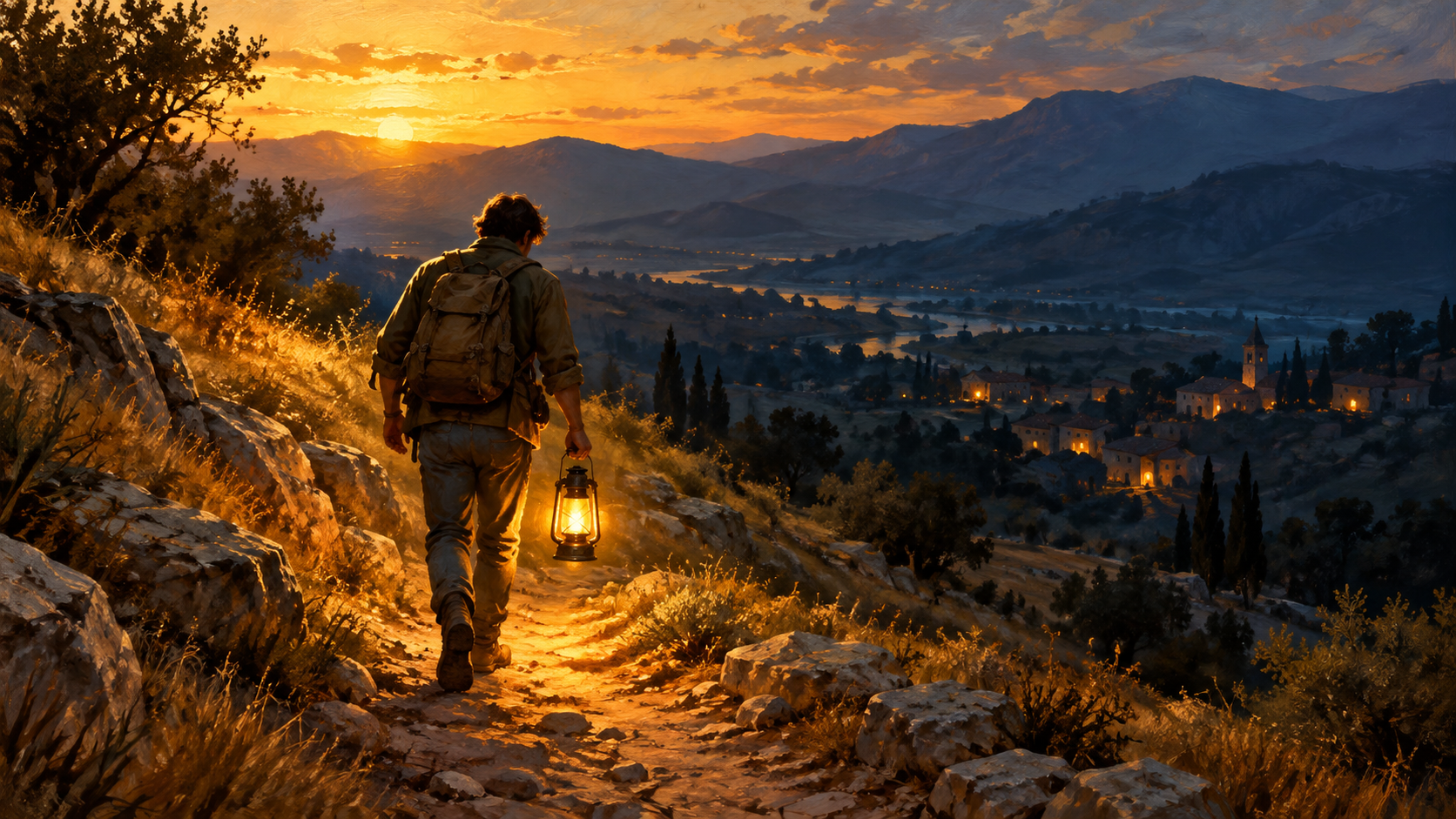
Somebody always has to go back.
That is the whole story. It runs under Scripture, under history, under the stories rising on the screens right now. One thread, pulled taut across three thousand years: somebody goes back for the ones who cannot get out alone.
We start where everything starts. We start with Christ.
He did not stay where it was safe. He did not send word from a distance, or wait for the lost to climb up to Him. He came down, into the flesh, into the dark, into death itself, for the ones who could never have climbed out on their own. The captives. The children. The hungry, the naked, the bruised, the ones whose hands hang down. He stood up in the synagogue at Nazareth and read His own commission aloud: "to preach deliverance to the captives… to set at liberty them that are bruised" (Luke 4:18).
That was not a sermon about rescue. That was the rescue, walking in the door.
And then He did the thing we somehow let get taken out of the story.
He turned to the ones He had rescued and said, in effect, now you: "As my Father hath sent me, even so send I you" (John 20:21). He sent His followers back out to find the children, to carry light into the darkest corners of the earth, to release the captives, to lift the hands that hang down, to feed the hungry, to clothe the naked.
Once His story was told, He did not keep it. He sent. He turned rescued people into rescuers.
That is what covenant does. It does not only save you. It sends you back.
And once you see it, you cannot unsee it. It is the same act, every time.
David went back for the sheep. Before the giant, before the crown, before a single psalm was ever sung, a boy walked into the teeth of the lion and the jaws of the bear for one lamb that could not save itself (1 Samuel 17:34–35). He was a rescuer before he was a king. Israel's greatest king was a shepherd first, and he never stopped being one.
Whitefield went back for the sleeping. Out past the church doors, into the open fields, into the towns the institutions had already written off. Awake, O sleeper. He went for the souls nobody else was coming to wake.
And a twenty-three-year-old named George Washington went back for his men. The Monongahela, July 1755. An ambush in the tree line. A killing field. Nearly a thousand men down in a single afternoon. And this unfinished, ambitious, not-yet-anything young officer rode back and forth through the crossfire for hours, carrying orders, rallying the broken, and helping lead the survivors out of the slaughter. Two horses shot out from under him. Four bullets through his coat. Not one wound.
He did not call it luck. He called it Providence. God did not preserve a finished man on that field. He preserved a man who would go back for his men, and He was only beginning to make him.
Now look at the screens.
Three summers ago, on Independence Day itself, a film went into theaters about a man who went into the darkest corners of the earth to carry the children out. They opened it on the Fourth of July, the one day the nation stops to count what freedom costs, and the choice was exactly right.
Three summers later, on that same Fourth of July weekend, a film about young Washington went into theaters. It opened, to the day, 272 years after the only battlefield surrender of his life, at Fort Necessity: the failure that first began to form him.
That is not a marketing calendar. That is a pattern. And it is not subtle. It keeps setting the same act in front of us, century after century, stage after stage, screen after screen, until we cannot pretend we do not see it:
Christ for the children. The shepherd for the sheep. The voice for the sleeping. The soldier for his men.
Different centuries. Different fires. One motion: strength spent, walking back into the danger, for the ones who could not walk out alone.
The search began with the children. It has never stopped going back.
And here is the question the pattern is actually asking. Not of them. Of you.
Covenant was never meant to stop at your own front door. Yes, it comes home. It has to come home. A nation cannot remember what its families forget, and a child cannot inherit what no one places in his hands. So bring it home. Teach it to your children. Let it become the very air in your house.
But do not stop at home.
Christ came home. The Word was made flesh and dwelt among us. And then He went back down into the dark. That is the whole motion, and half of it happens outside your door. There are children who are not yours yet. There are captives no one is coming for. There are hands hanging down in the darkest corners of this world, and the light does not reach them by staying lit in your own window. Somebody has to carry it out there.
The first ticket makes you an audience. The second makes you a rescuer.
And we know this works, because it already did. That film about the children did not fade. Its second week outdrew its first, growing when films are built to shrink, because the people it had moved would not sit still. They went online and bought seats for strangers, for people they would never meet. That is the whole pattern in one theater lobby: watch one, bring one, and the rescue spreads hand to hand until it reaches the ones no one else was coming for.
So watch one. Bring one. Then go and find the one nobody else is going back for.
That is the Path. It begins with Christ, who came back for you. It ends with Christ, who turns you toward the Father. And in between, it turns you around and sends you back down the same hill you just climbed, because now you know the way, and somebody down there is still waiting on the ones who go back.
Go back.
Sources
Luke 4:18 · John 20:21 · John 1:14 · 1 Samuel 17:34–35 · Battle of the Monongahela, July 9, 1755; Washington to John Augustine Washington, July 18, 1755 ("4 Bullets through my Coat, and two Horses shot under me") · Fort Necessity surrender, July 3, 1754